 Skip to content

Medsystems: Scaling Demand for Aesthetic Technology with an Integrated Google Ads + Meta Ads Approach

Introduction: Background & Context
Medsystems is a dermatology technology group with operations in Argentina, Colombia, and Brazil and more than 19 years of experience in the regional market.
It imports and sells cutting-edge technologies for clinical and aesthetic treatments, with a portfolio that includes Lumenis Stellar M22, LightSheer Desire, Ultraformer III, Lavieen, and Scizer, among other industry-leading devices.
The company has specialized consultants, a dedicated engineering team, and a customer base across the region, with a strong focus on support and after-sales service.

Key Metrics (KPIs)
Conversions
(Google Ads)
Conversions
(Meta Ads)
Cost per conversion (Google Ads)
Cost per conversion (Meta Ads)
Services Provided
Google Ads
Meta Ads
(Facebook/Instagram)
Industry
Aesthetic Technology and Dermatology
Client Testimonial

The Challenge
Medsystems’ regional growth called for its brand authority, built through showrooms, demos, and relationships with physicians, to carry over to search engines and social media as well. The goal was clear: more qualified opportunities for each product line (light-based energy, micro-focused ultrasound, medical lasers, multi-application platforms) without diluting the message or the value of each technology.
Search intent had to be channeled: someone searching for Stellar M22 shouldn’t follow the same journey as someone evaluating Ultraformer III or a medical-grade hair removal laser. And all of this had to happen within regulatory frameworks and with strict brand safety. On top of that, spend needed to scale while staying efficient: more visibility and clicks, yes, but with sustainable conversions and an inquiry mix that speaks the language of the business (specifications, represented brands, training, after-sales support).


The Strategy
We turned the complexity of the catalog into a demand generation system: Google Ads and social media feed into each other in a continuous optimization loop, with regular data-driven adjustments.
First, we organized the map by specialty and platform (multi-application dermatology, medical hair removal, fractional lasers, micro-focused ultrasound). On top of that architecture, Google Ads captured high-value intent at the moment of search, while Meta Ads drove discovery and consideration with proof-driven creative (case studies, skin textures, and before-and-after images with disclaimers) that warms up audiences who are ready to search.
Google Ads (Demand Capture)
- Architecture by platform and intent: separate campaigns and ad groups by product line (e.g., Stellar M22, LightSheer, Ultraformer III, Lavieen, Scizer) and by intent, with tailored conversion paths.
- Strong proof of value in ads and assets: messaging that highlights represented brands, regulatory approvals, and after-sales support, with extensions and paths to spec sheets and contact pages.
- Broad coverage guided by signals: controlled exploration using audiences, exclusions, and negative keywords; exploitation through tighter match types where value has been proven.
- Business-driven optimization: enhanced conversions and lead-quality tagging; regular bid and creative adjustments validated through A/B testing.


Meta Ads (Demand and Consideration)
- Creative built around clinical pain points and benefits: short-form formats with approved claims, social proof, and educational touches; professional UGC where appropriate.
- Layered audiences: lookalikes of qualified leads, video engagers, and visitors to key product pages; exclusion of low-value audiences to prevent ad fatigue.
- Nurturing sequences: recurring flows that move prospects from educational content to conversion-focused messages, timed to the industry’s seasonal peaks.
- Measurement aligned with Google Ads: standardized events and UTMs to close the loop between social media impressions and branded or generic searches on Google.
Results
We grew with strategy and consistency: greater visibility, more qualified demand, and opportunities that move forward. We scaled while protecting spend efficiency and lead quality.
Period analyzed:
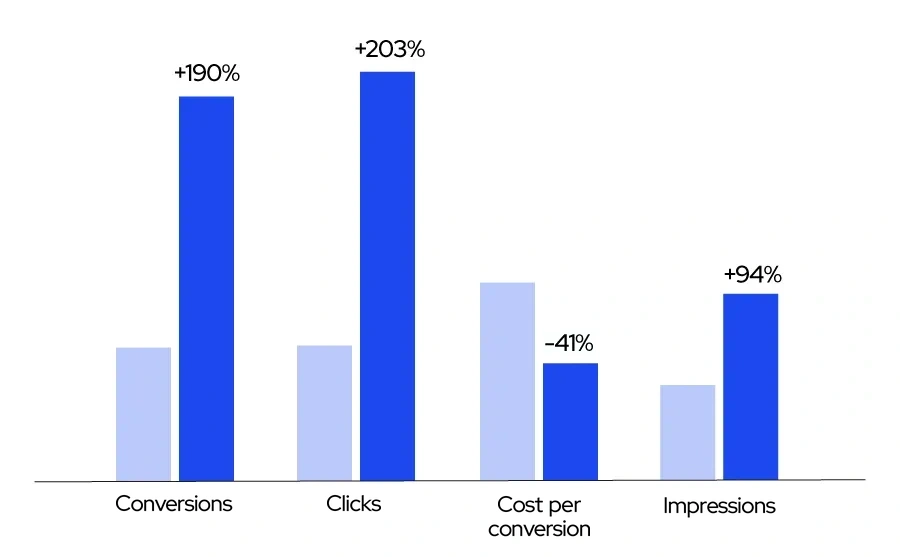
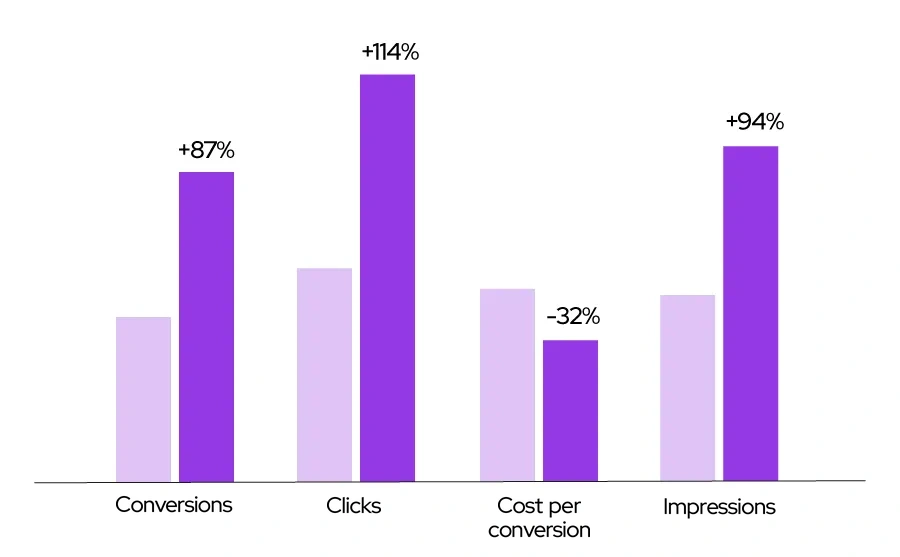
Comparing Q3 2026 vs. Q2 2026, the results were:
Google Ads Results
- Conversions: +190%
- Clicks: +203%
- Cost per conversion: -41%
- Impressions: +94%
Meta Ads Results
- Conversions: +87%
- Clicks: +114%
- Cost per conversion: -32%
- Impressions: +94%
Ready to see results like these?